Research Method
Device reviews with receipts, not miracle language.
RedLightTested scores red light therapy hardware by documented output, documentation, build quality, usability, warranty support, and buyer fit. It is a product-review method, not a medical diagnosis or treatment plan.
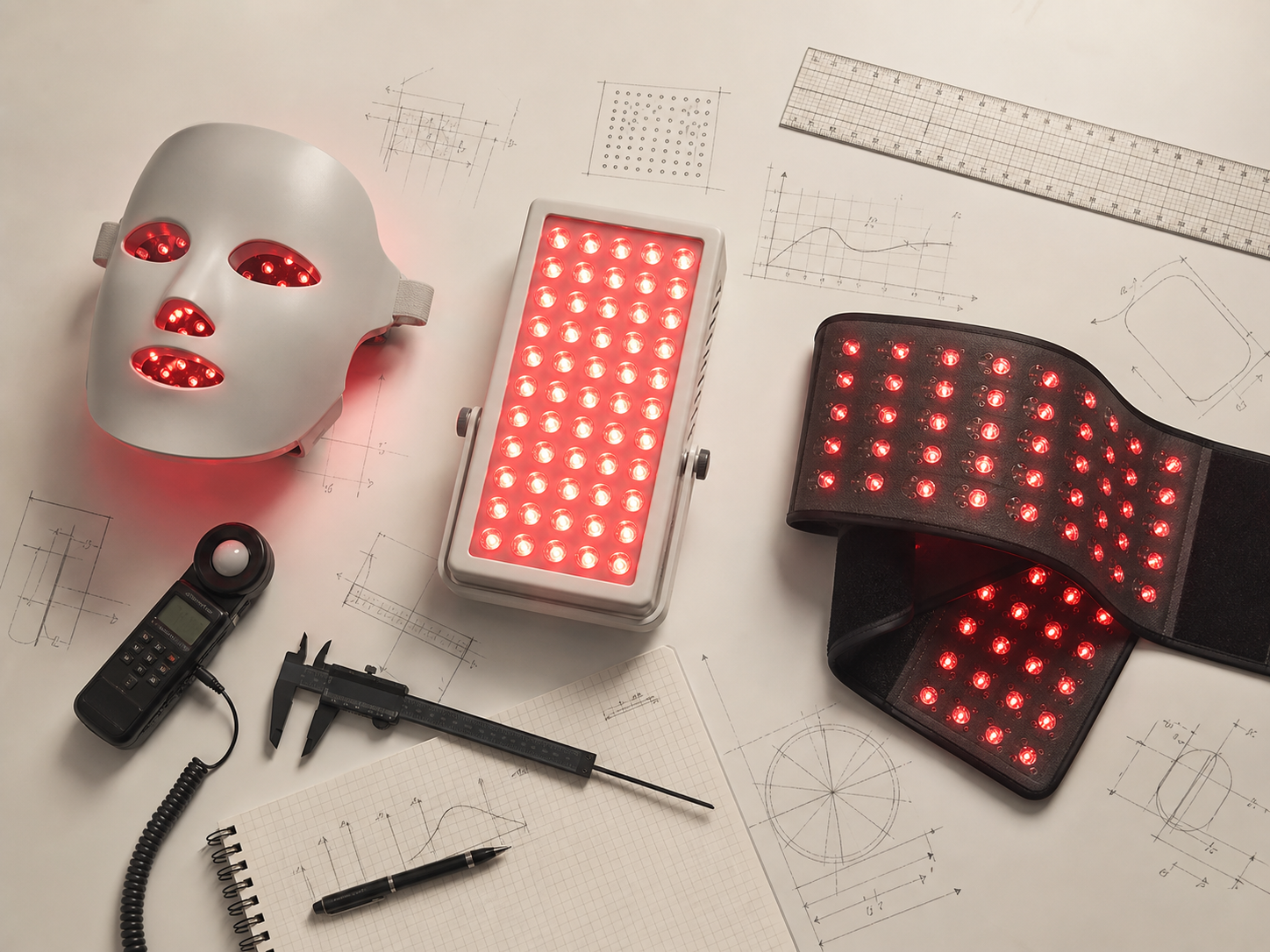
What We Record
The bench sheet
Irradiance
Record the output the brand publishes, with the distance when stated, and label it brand-stated unless a dated third-party source backs it. We do not measure irradiance ourselves.
Shows relative device strength without treating power as a guaranteed health outcome.
Wavelength/spec documentation
Log claimed red and near-infrared wavelengths, look for credible documentation, and flag unclear or missing specs.
Helps separate transparent hardware claims from vague light-therapy marketing.
Heat, noise, and setup friction
Collect what the brand and public owner feedback say about fan behavior, surface heat, controls, mounting, timers, and storage, and flag what is undocumented.
A device only helps if people can tolerate using it consistently.
Build and ownership risk
Review housing quality, cords, stands, included accessories, warranty terms, support reputation, and replacement friction.
Large panels are expensive hardware. Durability and support matter as much as headline specs.
Score Formula
A buyer-fit rating
The 6.0 to 9.5 rating is intentionally narrow. Devices below the useful range do not belong in a recommendation table, and a 9.5 still has tradeoffs.
35%
Stated output
Brand-published irradiance, usable coverage, and whether the distance and source are documented.
20%
Documentation clarity
Published wavelengths, safety language, spec completeness, and claim restraint.
20%
Usability
Controls, mounting, comfort, noise, heat, storage, and daily routine fit.
15%
Build and warranty
Housing, accessories, support terms, replacement risk, and long-term confidence.
10%
Value
Price against output, coverage, warranty, form factor, and closest alternatives.
Independence Guardrails
Clear incentives, clear limits.
The site earns from some outbound links, including Amazon. That keeps the research funded, but it does not buy a rank, hide a caveat, or turn a weak product into a pick.
- Scores compare devices, not medical outcomes.
- Affiliate links never change placement or rating.
- If a claim cannot be checked, the review says so.
- Recommendations change when better data or better devices appear.
Want the fast path?
Start with the product index, filter by form factor and use case, then read the individual review before buying. The right device is usually the one that fits your space, budget, and routine.
Compare reviewed devices