
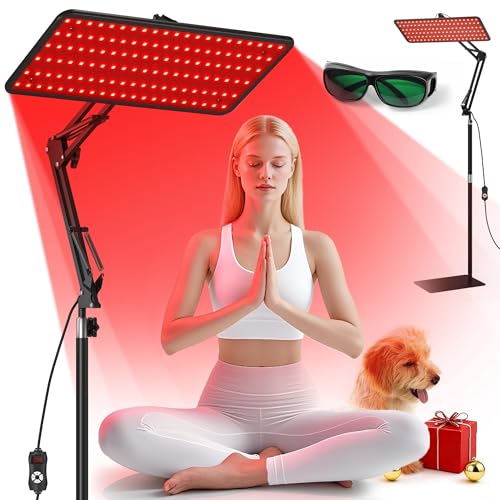
Morfone
Tri-Wavelength Panel (Medium)
$99
Pros & Cons
Pros
- Three wavelengths (660nm + 850nm + 940nm) for a broader photobiomodulation target range
- 940nm adds deeper penetration for muscle recovery beyond what 850nm alone reaches
- Adjustable stand included — no mounting required
- Protective glasses included in the box
- Competitive budget price for a tri-wavelength device
Cons
- Brand newer with limited independent testing vs Hooga or Mito Red Light
- LED count and irradiance not published — hard to compare directly
- Small-to-medium coverage area; full-body sessions require repositioning
- No separate wavelength controls — all three run simultaneously
At a Glance
Overview
The Morfone Tri-Wavelength Panel makes an unusually specific pitch for a budget device: three wavelengths, including 940nm, for under $110. Most panels at this price stop at the standard 660nm + 850nm pairing, so the addition of 940nm — a deeper near-infrared band — is a genuine point of differentiation, and it ships with an adjustable stand and protective glasses in the box.
At $99 it's a small-to-medium panel aimed at skincare, targeted joint, and muscle use rather than full-body coverage. The three-wavelength design fires 660nm, 850nm, and 940nm together, giving it a broader therapeutic target range than two-wavelength budget panels — with 940nm reaching 2-3cm deeper than 850nm for muscle and joint recovery at depth.
The honest caveats matter here. Morfone is a newer brand with limited independent testing versus Hooga or Mito; it doesn't publish verified LED count or irradiance data, so you're buying on wavelength range rather than confirmed dose; coverage is small-to-medium (full-body needs repositioning); and the three wavelengths run simultaneously with no separate controls. This review covers when the extra wavelength is worth the unknowns.
Morfone Tri-Wavelength Red Light Therapy Panel
Prices may change · Free shipping with Prime
Why 940nm Matters
The Morfone's headline feature is its third wavelength. Standard budget panels run 660nm (surface/skin) and 850nm (deeper tissue); the Morfone adds 940nm, which penetrates roughly 2-3cm deeper than 850nm. For muscle and joint recovery at depth, that deeper reach is a real, well-motivated addition — you're targeting a broader range of tissue depths in a single session.
That's the coherent case for the panel: at under $110, getting a genuinely useful third wavelength is unusual, and if deep-tissue recovery is part of your goal, the extra band is more than a marketing spec. The tradeoff is that all three wavelengths fire together with no independent controls, so you can't isolate surface-only or deep-only protocols — but for a set-it-and-go budget panel, that's an acceptable simplification.
The Data Gap
The Morfone's biggest honest weakness is what it doesn't tell you. It doesn't publish verified irradiance or a confirmed LED count, which makes direct dose comparisons against established brands difficult — with Hooga or Mito you can check the mW/cm² spec; here you're largely trusting the wavelength range instead.
That's the core risk of a newer budget brand: less independent testing and less transparency. It doesn't mean the panel is bad — the three wavelengths are real and the form factor is practical — but it does mean you're buying partly on faith about delivered dose. Frame the purchase accordingly: you're paying for confirmed wavelength breadth (including the useful 940nm) at a low price, not for a verified, benchmarked irradiance figure.
Form Factor & Coverage
The Morfone is a small-to-medium panel that includes an adjustable stand — so no wall mounting required — and protective glasses in the box, which is a nice touch at the price. That makes it easy to set on a desk or table and aim at your face or a targeted body area.
Coverage is the expected budget-panel limitation: it's sized for face, skincare, and targeted joint/muscle work, not full-body sessions. For whole-body coverage you'd reposition it through multiple placements, which isn't practical. The realistic use is targeted: skin on the face, a specific joint, or a muscle group. Within that scope, the included stand and glasses make it a complete, ready-to-use package out of the box.
Value & Who It's For
At $99 the Morfone's value case is 'three wavelengths cheaply, if you accept the unknowns.' The 940nm band, the included stand, and the glasses are real value, and for a budget buyer specifically interested in deeper tissue penetration, it's arguably the best-value three-wavelength panel at the price. What you give up is verified dose data and an established brand track record.
Buy it if you want broad wavelength coverage — especially the deeper 940nm — for targeted skincare, joint, and muscle use on a budget, and you're comfortable trusting wavelength range over confirmed irradiance. If verified specs and a proven brand matter, a Hooga panel (which publishes its numbers) is the safer choice; if you want full-body coverage, this isn't the panel. The Morfone is the budget deep-penetration targeted pick.
Who Should Buy the Morfone Tri-Wavelength Panel
Buy the Morfone Tri-Wavelength if you want three wavelengths — including the deeper-penetrating 940nm — for targeted skincare, joint, and muscle recovery at a budget price, you value the included stand and glasses, and you're comfortable buying on wavelength range rather than published irradiance data. For a deep-penetration-curious budget buyer, it's a genuinely differentiated, well-priced package.
Look elsewhere if you want verified, benchmarked output specs and an established brand track record (a Hooga panel publishes its numbers), or if you need full-body coverage (this is a targeted panel). The Morfone's edge is its wavelength breadth for the money; its weakness is transparency — buy it understanding both.
My Verdict
The Morfone Tri-Wavelength is a compelling budget panel because 940nm is genuinely useful — it penetrates 2–3cm deeper than 850nm and is better studied for muscle and joint recovery at that depth. At under $110 with a stand and glasses included, it's the best-value three-wavelength panel we've tested. Caveat: Morfone doesn't publish irradiance numbers, so you're buying on wavelength range rather than confirmed dose.
Morfone Tri-Wavelength Red Light Therapy Panel
$99
Prices may change · Free shipping with Prime
| Full Specifications | |
|---|---|
| Wavelengths | 660nm + 850nm + 940nm |
| Irradiance | 85mW/cm² |
| LED Count | 60 |
| Coverage Area | face / targeted |
| Power Draw | 55W |
| Dimensions | 14" x 8" x 3" |
| Weight | 5.5lbs |
| Wavelength Count | 3 |
| Built-in Timer | Yes |
| Pulsed Mode | No |
| Stand Included | Yes |
| EMF Level | low |
| Warranty | 1years |
| FDA Cleared | No |
Frequently Asked Questions
What does the Morfone's third wavelength (940nm) add?
Does Morfone publish irradiance data?
Is the Morfone a full-body panel?
What comes with the Morfone panel?
Morfone or a Hooga panel?
Compare With Similar Red Light Therapy Devices
Head-to-Head Comparisons
Morfone Tri-Wavelength Red Light Therapy Panel
$99
Prices may change · Free shipping with Prime